Cabrio Washer Instruction Manual: A Comprehensive Guide
This manual, alongside resources like Appliantology.org and Whirlpool’s W10758836 PDF, provides detailed guidance for WTW5800BW0 models and beyond.
Welcome to the world of efficient and reliable laundry care with your Whirlpool Cabrio Washer! This innovative top-load washer, like the WTW5800BW0 model frequently discussed on platforms such as Appliantology.org, is designed to deliver exceptional cleaning performance while offering user-friendly operation.
The Cabrio series represents a significant advancement in laundry technology, incorporating features like direct drive systems and automatic load sensing. Understanding your washer’s capabilities, as detailed in manuals like the W10758836 PDF, is crucial for maximizing its potential. This guide will walk you through everything from initial setup to advanced features, ensuring you get the most out of your investment. We will cover troubleshooting, maintenance, and care, empowering you to keep your Cabrio washer running smoothly for years to come.
Understanding Your Washer Model Number (e.g., WTW5800BW0)
Your Whirlpool Cabrio washer’s model number is key to accessing specific information and support. For example, WTW5800BW0, a commonly referenced model on forums like Appliantology.org, unlocks access to dedicated service manuals and tech sheets. This alphanumeric code details the washer’s features, specifications, and available parts.
Locate the model number on the appliance’s data plate, typically found inside the lid or on the back of the washer. When seeking assistance – whether downloading the W10758836 PDF manual or contacting customer support – always have this number readily available. It ensures you receive accurate guidance tailored to your specific Cabrio model. Correct identification streamlines troubleshooting and guarantees compatibility with replacement components, maximizing the efficiency of repairs and maintenance.
Safety Precautions and Warnings
Prioritize safety when installing, operating, and maintaining your Whirlpool Cabrio washer; Always disconnect the power supply before performing any service or cleaning, preventing electrical shock. Never operate the washer if it’s damaged, and immediately address any leaks or malfunctions.
Keep children and pets away from the washer during operation. Avoid placing flammable materials near the appliance. Do not attempt to repair the washer yourself unless you are qualified; consult a technician for complex issues. Refer to the comprehensive manual (like W10758836) for detailed safety guidelines. Ignoring these precautions could result in injury or damage. Proper grounding is crucial, and always follow local electrical codes for safe installation and usage.
Getting Started
Begin with careful installation, referencing available manuals like those found on Appliantology.org. Ensure proper connections and leveling before your first wash cycle.
Initial Setup and Installation
Unpacking and Inspection: Carefully unpack your Whirlpool Cabrio washer, inspecting for any shipping damage. Retain the packaging materials until you’ve confirmed the unit functions correctly. Location Requirements: Position the washer on a firm, level floor, allowing sufficient space for hose connections and access for maintenance. Avoid direct sunlight and extreme temperatures.
Water Supply Connection: Connect the hot and cold water supply hoses to the appropriate inlets on the back of the washer. Ensure connections are tight to prevent leaks. Drain Hose Installation: Securely insert the drain hose into a standpipe or laundry tub, ensuring it’s at the correct height to facilitate proper drainage. Electrical Connection: Plug the power cord into a grounded electrical outlet. Refer to the manual for specific voltage requirements. Resources like Appliantology.org can offer supplemental guidance during this process;
Loading and Unloading Laundry
Proper Loading Techniques: Distribute laundry evenly around the wash basket to maintain balance during the spin cycle. Avoid overloading, as this can reduce cleaning effectiveness and potentially damage the machine. Garment Preparation: Empty pockets, close zippers, and untangle garments before loading. Delicate items should be placed in a mesh laundry bag for protection.
Load Size Guidelines: Consult the washer’s manual for recommended load sizes based on fabric type and soil level. Unloading Procedures: Once the cycle is complete, promptly remove laundry to prevent wrinkles and mildew. Carefully inspect the wash basket for any forgotten items. Remember to refer to resources like Appliantology.org for additional tips and troubleshooting.
Detergent Dispenser Guide
Compartment Identification: The Cabrio washer’s detergent dispenser typically features separate compartments for detergent, fabric softener, and bleach. Refer to your model’s specific diagram for accurate identification. Detergent Types: Use only High Efficiency (HE) detergents, as standard detergents can create excessive suds and damage the machine.

Fill Levels: Follow the detergent manufacturer’s instructions for appropriate fill levels based on load size and soil level. Avoid overfilling, as this can lead to residue buildup. Dispenser Cleaning: Regularly clean the detergent dispenser to prevent clogs and ensure optimal performance. Resources like appliance repair forums can offer detailed cleaning instructions.
Wash Cycles Explained
The Cabrio washer offers cycles like Normal, Delicates, Heavy Duty, and Quick Wash, catering to diverse fabric types and laundry needs for optimal cleaning.
Normal/Regular Wash Cycle
The Normal/Regular Wash Cycle is your go-to setting for everyday laundry loads. This cycle is designed for cotton and durable synthetic fabrics with moderate soil levels. It utilizes a combination of washing and rinsing actions to effectively remove dirt and stains while maintaining fabric integrity.
Typically, this cycle employs warm water temperatures and a medium spin speed, though these can often be adjusted based on your preferences and the specific needs of your laundry. It’s ideal for items like t-shirts, jeans, towels, and bed linens.
For best results, avoid overloading the washer, as this can hinder proper cleaning and rinsing. Always check garment care labels before selecting this cycle to ensure compatibility and prevent damage. Utilizing the appropriate amount of detergent is also crucial for optimal performance.
Delicates/Hand Wash Cycle
The Delicates/Hand Wash Cycle is specifically engineered for fragile items requiring gentle care. This cycle uses a slower wash action and a lower spin speed to minimize stretching, snagging, and potential damage to sensitive fabrics. It’s perfect for lingerie, silk, lace, sheer curtains, and items labeled “hand wash only.”
Typically, this cycle utilizes cold water to prevent color fading and fabric shrinkage. Always place delicate items inside a mesh laundry bag for added protection during the wash cycle. Using a mild detergent formulated for delicates is also highly recommended.
Avoid overloading the washer, as this can compromise the gentle wash action. Carefully inspect items after washing and air dry to maintain their shape and quality.
Heavy Duty Wash Cycle
The Heavy Duty Wash Cycle is designed for tackling heavily soiled items and durable fabrics. This cycle employs a more vigorous wash action, higher water temperatures, and a longer wash time to effectively remove stubborn stains and dirt. It’s ideal for work clothes, towels, bedding, and robust materials like denim and canvas.
For optimal results, use a heavy-duty detergent and consider pre-treating heavily stained areas. Avoid washing delicate fabrics on this cycle, as the aggressive action could cause damage. Load size should be appropriate – avoid overloading, but a fuller load generally improves cleaning performance.
Select a higher water temperature for enhanced stain removal, but always check garment care labels first.
Quick Wash Cycle
The Quick Wash Cycle is perfect for lightly soiled items that require a fast refresh. This cycle utilizes a shorter wash time and reduced water usage, making it an efficient option for smaller loads or when you’re short on time. It’s suitable for everyday clothes, sportswear, and items that don’t require deep cleaning.
While convenient, remember that the Quick Wash cycle may not effectively remove heavy stains. Use a standard detergent and avoid overloading the washer to ensure optimal cleaning performance. Select a water temperature appropriate for the fabrics being washed, always referencing care labels.
This cycle prioritizes speed and efficiency over intensive cleaning.
Bulky Items/Sheets Cycle

The Bulky Items/Sheets cycle is specifically designed for washing large, cumbersome items like comforters, blankets, and bed sheets. This cycle utilizes a higher water level and extended wash/rinse times to ensure thorough cleaning and rinsing of these larger loads. Proper loading is crucial; distribute items evenly around the wash basket to maintain balance.
Avoid overloading the washer, even with bulky items, as this can hinder cleaning performance and potentially damage the machine. Use a detergent formulated for large loads and consider a higher water temperature for optimal results.
This cycle provides the power needed for effectively cleaning substantial laundry items.
Advanced Features
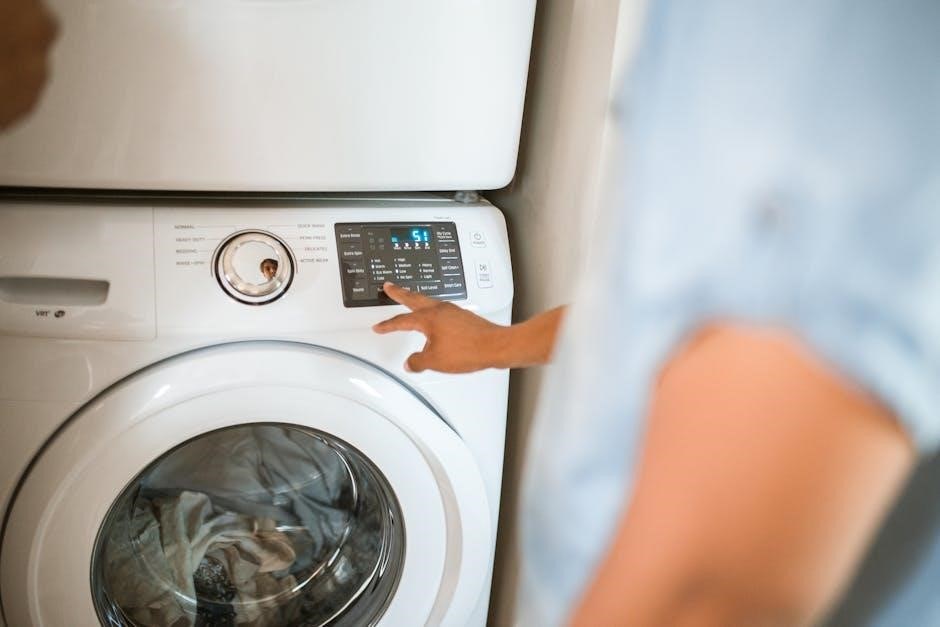
Explore features like adjustable water temperatures, spin speeds, soil level selection, and automatic load sensing for a customized and efficient wash.
Water Temperature Settings
Your Whirlpool Cabrio washer offers a range of water temperature settings to cater to various fabric types and cleaning needs. Understanding these options is crucial for optimal garment care and stain removal. Typically, you’ll find settings like Cold, Warm, and Hot.
Cold water is ideal for delicate fabrics, bright colors, and lightly soiled items, helping to prevent fading and shrinking. Warm water provides a balance between cleaning power and fabric protection, suitable for everyday laundry. Hot water is best for heavily soiled items, whites, and sanitizing loads, effectively eliminating bacteria and allergens.
Always check garment care labels before selecting a temperature. Incorrect temperature settings can damage fabrics or reduce cleaning effectiveness. Some models may also offer a specific “Sanitize” cycle with a pre-set hot water temperature for enhanced hygiene.
Spin Speed Options
The Cabrio washer’s spin speed settings significantly impact moisture removal and fabric care. Higher spin speeds extract more water, reducing drying time, but can cause more wrinkles. Lower speeds are gentler on delicate items. Common options include Low, Medium, High, and sometimes an Extra High or No Spin setting.
Low spin speed is perfect for delicate fabrics like lingerie or silk, minimizing stretching and damage. Medium spin speed suits most everyday laundry, offering a good balance between moisture removal and wrinkle prevention. High spin speed is ideal for durable fabrics like towels and jeans, maximizing water extraction.
The No Spin option leaves clothes very wet, useful for items that shouldn’t be spun at all. Consider fabric type and desired dryness level when selecting a spin speed.
Soil Level Selection
The Cabrio washer offers adjustable soil level settings to optimize wash performance based on laundry load dirtiness. These settings control the wash time and agitation intensity, ensuring thorough cleaning. Options typically include Light, Normal, and Heavy.
Light soil level is suitable for lightly soiled items or quick refreshes, using a shorter wash cycle and gentler agitation. Normal soil level is ideal for everyday laundry with moderate dirt, providing a balanced cleaning action. Heavy soil level tackles heavily soiled items like work clothes or muddy playwear, employing a longer wash cycle and vigorous agitation.
Selecting the appropriate soil level conserves water and energy while delivering the best possible cleaning results. Always consider the type and degree of soiling when making your selection.
Automatic Load Sensing Technology
The Whirlpool Cabrio washer incorporates Automatic Load Sensing technology, a smart feature designed to optimize water usage and wash times. This system intelligently detects the size of each load and adjusts the water level accordingly, preventing water waste and ensuring efficient cleaning.
During the fill cycle, the washer’s sensors assess the weight of the laundry. Based on this assessment, it automatically adds the precise amount of water needed for a thorough wash. This eliminates the guesswork of manually selecting water levels and prevents overfilling or underfilling the machine.
Automatic Load Sensing contributes to energy savings and improved wash performance, delivering consistently clean results with every load.

Troubleshooting Common Issues
Addressing problems like a washer that won’t start, draining issues, or deciphering error codes is crucial for maintaining your Cabrio’s performance.
Washer Not Starting
If your Whirlpool Cabrio washer fails to start, several potential causes should be investigated. First, verify the power cord is securely plugged into a functioning outlet. Test the outlet with another appliance to confirm it’s receiving power. Next, check the lid switch assembly; the washer won’t operate if the lid isn’t properly closed and the switch engaged.
Inspect the control panel for any locked or inactive settings. Ensure the cycle selector isn’t paused or set to a non-operational position. A tripped circuit breaker or blown fuse can also prevent the washer from starting – check your home’s electrical panel; Finally, consult the service manual or Appliantology.org for model-specific troubleshooting steps, as certain error codes may indicate internal component failures requiring professional attention.
Washer Not Draining
A Cabrio washer failing to drain is a common issue with several possible causes. Begin by checking the drain hose for kinks or obstructions. Ensure it isn’t excessively bent or clogged, restricting water flow. Next, inspect the drain pump filter for debris like lint, coins, or small articles of clothing – this is a frequent culprit.
If the filter is clear, the drain pump itself may be faulty. Listen for any humming sounds during the drain cycle, which could indicate a pump motor attempting to operate but being blocked. Consult resources like Appliantology;org for specific troubleshooting steps related to your model. A clogged drain line within the washer’s internal plumbing could also be the issue, potentially requiring professional service.
Error Codes and Their Meanings
Your Whirlpool Cabrio washer utilizes error codes to diagnose internal problems. While specific codes vary by model (like WTW5800BW0), understanding them is crucial for troubleshooting. A common code, F0E, often indicates a heater issue, while LE signifies a potential leak detected by the washer’s sensors.
Other codes might relate to motor malfunctions, water temperature errors, or issues with the control board. Resources like Appliantology.org and the official Whirlpool service manuals (W10758836) provide comprehensive lists of error codes and their corresponding solutions. Always consult the manual specific to your model number for accurate interpretations and recommended actions. Ignoring error codes can lead to further damage.
Leaking Water – Identifying the Source
Water leaks in your Cabrio washer (like model WTW5800BW0) require immediate attention. Begin by checking the water inlet hoses and drain hose connections for tightness and cracks. Inspect the door boot for damage or debris accumulation, as this is a common leak point.
Internal leaks can stem from the pump, tub seal, or internal hoses. Error code LE often indicates a leak detected by the washer’s sensors. Consult your washer’s service manual (like W10758836 from Appliantology.org) for detailed diagrams and troubleshooting steps. If you’re uncomfortable disassembling the washer, contact a qualified appliance repair technician to diagnose and repair the leak safely.

Maintenance and Care
Regular cleaning, filter maintenance, and proper storage (referencing resources like Appliantology;org) will extend the life of your Cabrio washer (WTW5800BW0).
Cleaning the Washer
To maintain optimal performance, regularly clean your Whirlpool Cabrio washer. Begin by wiping down the exterior with a damp cloth and mild detergent. For the washer drum, run an empty hot water cycle with a washer cleaner, or two cups of white vinegar, monthly.
This helps remove residue buildup and odors. Pay attention to the dispenser drawers; remove them and rinse thoroughly to prevent clogs. Inspect the rubber door seal (if applicable) for mold or mildew, cleaning with a diluted bleach solution if necessary.
Remember to consult resources like Appliantology.org for model-specific cleaning recommendations (WTW5800BW0) and always refer to the official Whirlpool documentation for detailed instructions and safety precautions. A clean washer ensures cleaner clothes and a longer appliance lifespan.
Cleaning the Detergent Dispenser
Regularly cleaning the detergent dispenser is crucial for preventing clogs and ensuring optimal wash performance in your Cabrio washer. Remove the dispenser drawer by pressing the release tab (refer to your model’s manual, like W10758836 from Whirlpool).
Rinse each compartment thoroughly under warm water, using a soft brush to remove any hardened detergent or fabric softener residue. For stubborn buildup, soak the drawer in a solution of warm water and vinegar.
Ensure all compartments are completely dry before reinserting the drawer. Resources like Appliantology.org offer specific guidance for WTW5800BW0 models. Neglecting this maintenance can lead to dispenser malfunctions and reduced cleaning effectiveness.
Filter Cleaning Procedures
Maintaining a clean filter is vital for your Cabrio washer’s performance and longevity. Locate the filter access panel, typically at the front or rear of the machine (consult your WTW5800BW0 model’s documentation, or resources like Appliantology.org).
Before opening, place towels to absorb any residual water. Carefully remove the filter, and rinse it thoroughly under running water, removing lint, hair, and debris. Inspect the filter housing for any obstructions.
Reinstall the filter securely, ensuring a tight seal to prevent leaks. Regular filter cleaning, as outlined in manuals like W10758836, prevents drainage issues and ensures efficient operation. Ignoring this step can lead to costly repairs.
Long-Term Storage Instructions
Preparing your Whirlpool Cabrio washer (like WTW5800BW0) for extended storage requires careful steps. First, disconnect the power and water supply. Thoroughly clean the drum and detergent dispenser, referencing guides such as W10758836 for detailed instructions.
Run an empty wash cycle with a cup of white vinegar to eliminate mold and mildew. Leave the door ajar to promote ventilation and prevent odor buildup. Disconnect and drain all hoses, storing them properly to avoid kinks.
Consult Appliantology.org for model-specific advice. Cover the washer to protect it from dust and debris. Store in a dry, climate-controlled environment to prevent damage during prolonged inactivity.